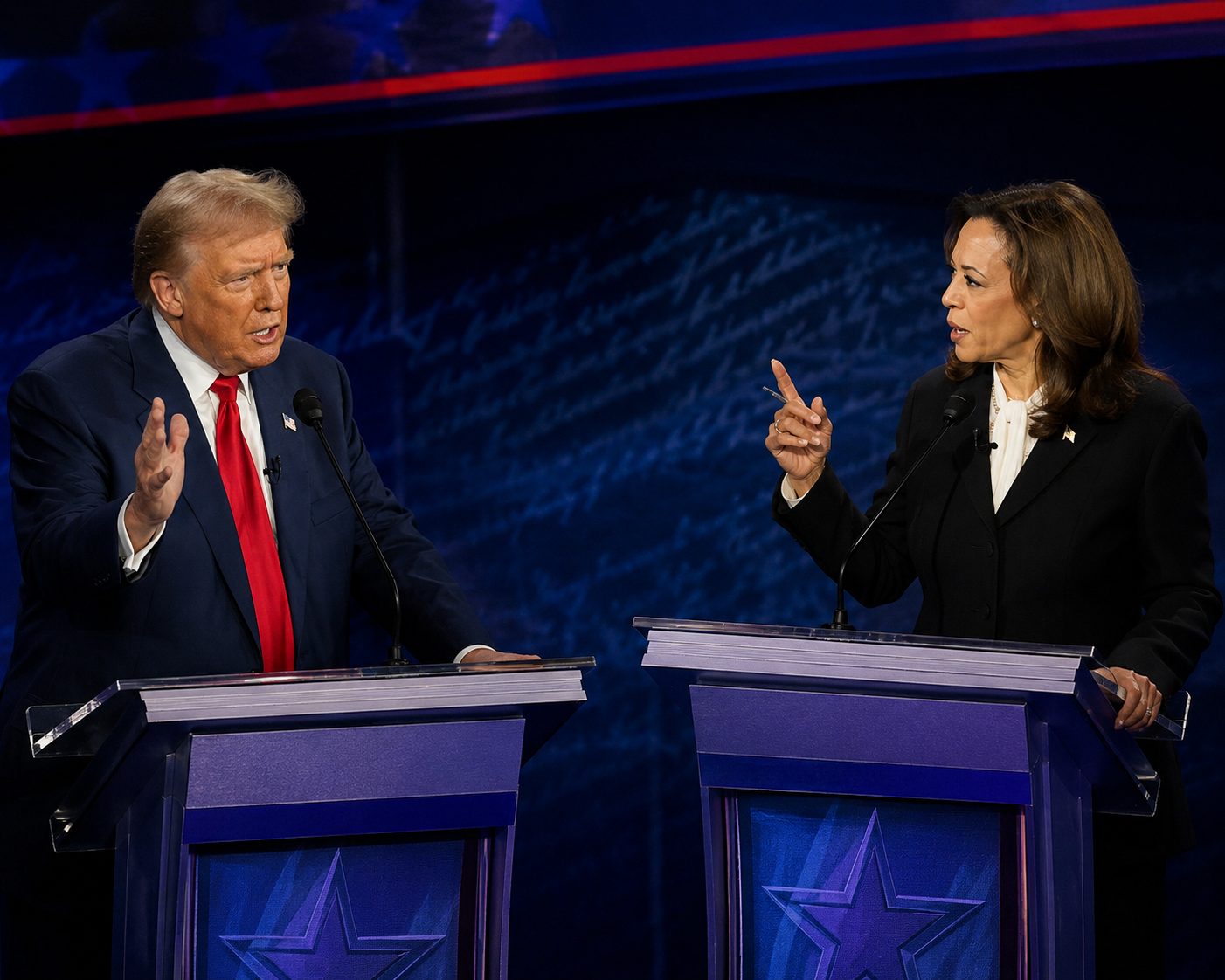
As a political observer, the recent U.S. presidential debate between Donald Trump and Kamala Harris felt like more than just an exchange of words. It was a high-stakes collision of two distinct political visions. Both candidates showcased their unique strengths. They also exposed their vulnerabilities. This debate was a fascinating display of policy, leadership, and personality.
In this post, I’ll break down both Trump’s and Harris’s debate performances with a critical eye. I will examine how each handled the pivotal issues of our time. I’ll also analyze their political strategies, leadership personas, and overall demeanor. I’ll also explore how they navigated controversy and conspiracy. Finally, I’ll rate their performances on a scale of 5, with 5 being exemplary and 0 falling flat. Buckle up. This is a deep dive into a debate that shape the future of U.S. politics.
Policy & Stand on Issues
When it comes to policy, both Trump and Harris came prepared to stake their claims. Their approaches couldn’t have been more different.
Donald Trump held firm on the familiar pillars of his presidency: economic resurgence, deregulation, and an unyielding focus on immigration. His advocacy for tax cuts was well-articulated. He also emphasized slashing red tape. He proudly waved the banner of pre-pandemic economic success. But when it came to healthcare, his promises to "replace the Affordable Care Act" with something better felt vague. They seemed elusive. They were much like a ship with no course. His views on climate change were starkly dismissive. He framed environmental regulations as roadblocks to economic growth. He missed an opportunity to tackle a growing public concern.
And, of course, Trump couldn’t resist wading into the waters of conspiracy. His now-familiar assertions of widespread voter fraud, particularly around mail-in ballots, resurfaced despite a lack of significant evidence. It’s a message that undoubtedly energizes his loyal base. However, for those seeking depth and detail, it left much to be desired.
On the other hand, Kamala Harris brought a well-rounded, policy-rich agenda to the table. She expertly laid out her plans to bolster healthcare. This was to be done by expanding on the Affordable Care Act. She offered a clear and structured alternative to Trump’s promises. Her commitment to tackling climate change was equally strong. She promised to re-enter the Paris Agreement. She also planned to implement robust environmental protections. Harris also made a compelling case for criminal justice reform. She highlighted systemic inequities. She emphasized the need for a more just and equitable society. However, she too left some questions hanging. Specifically, how these ambitious reforms would be financed. Also, how they would be implemented in today’s divided political landscape.
Trump relied on broad strokes. Harris dove into the weeds of policy details. This appealed to voters looking for specifics rather than rhetoric. But to her credit, Harris largely avoided engaging in conspiracy talk, focusing instead on facts and policy critiques. Her pointed remarks about the Trump administration’s handling of COVID-19 were grounded in reality. They sparked a fiery exchange with the President.
Harris: 4/5 · Trump: 3/5
Politics & Strategy
The political maneuvering shown during the debate was a masterclass in contrasting strategies.
Donald Trump, as expected, stuck to the script that has worked for him thus far. He energized the base, hit hard, and framed himself as the bulwark of law and order. His consistent focus on crime and "Democrat-led" cities falling into chaos resonated with his supporters. It also played well to his tough-on-crime persona. His defence of deregulation and tax cuts as engines of economic growth was equally firm. It catered to conservatives and business-minded voters.
However, this laser focus on his core issues may have been a double-edged sword. While he successfully consolidated his base, his rhetoric risked alienating moderates. Undecided voters were perhaps hoping for more bridge-building and less polarization. He relied on divisive topics like immigration and voter fraud. This may have worked in some circles. It fell flat in others.
Kamala Harris, by contrast, employed a far more measured and inclusive strategy. She aimed to appeal to a broad spectrum of voters (both progressives and moderates) by staying calm and delivering policy-focused answers. Her critiques of Trump’s handling of the pandemic were precise. They centered around science and the need for government intervention to protect public health. Harris made a strong pitch for unity and rebuilding trust in institutions. She presented herself as the candidate for both recovery and reform.
That said, Harris’s cautious approach may have left some viewers wanting more fire in her responses. This was especially true when facing Trump’s relentless interruptions. Her strategy of taking the high road paid off in terms of decorum. Yet, she occasionally missed opportunities to push back harder on Trump’s bolder assertions.
Harris: 4/5 · Trump: 3.5/5
Persona & Leadership
The debate was as much about personality as it was about policy. Each candidate’s leadership style was unmistakably on show.
Donald Trump came out swinging: assertive, confident, and unapologetic. His leadership style was unmistakable: no-nonsense and unafraid of confrontation. For his supporters, this steadfastness is part of what makes him a fighter. His portrayal of the economic and law enforcement successes under his administration was powerful. His refusal to back down on key points, like his COVID-19 response, demonstrated his unwavering commitment to his positions.
However, Trump’s style also bordered on overbearing at times. His frequent interruptions, particularly during Harris’s responses, risked alienating viewers who wanted to see a more respectful exchange. For some, his bold persona will be seen as strength. Others may find it lacking the empathy and calm needed in times of crisis.
Kamala Harris, in stark contrast, exuded calm, resilience, and empathy. Even as Trump continually interrupted her, Harris maintained her composure, delivering firm yet polite responses. Her now-famous “Mr. President, I’m speaking” moment stood out as a display of leadership under pressure. Harris’s leadership style was one of steadiness and grace. Her approach appealed to voters looking for a more measured and empathetic leader. This was especially true in times of national crisis.
Yet, while her calm demeanour was undoubtedly a strength. Harris’s restraint may have left some viewers wishing she had been more assertive. They may have wanted her to push back more on Trump’s aggressive claims. Still, her ability to navigate the debate with dignity and poise was a clear testament to her leadership style.
Trump: 3/5 · Harris: 4/5
Dignity & Conduct
The way a candidate conducts themselves in a debate speaks volumes about their character and temperament.
Donald Trump leaned heavily into his aggressive style, which often felt more like a brawl than a debate. His frequent interruptions, his tendency to talk over Harris, and his refusal to engage with certain questions in a more thoughtful way hurt his overall conduct score. While his assertiveness played well with his base, it came at the expense of the debate’s decorum. Nevertheless, his approach was consistent with his image as a tough leader, unafraid to dominate the conversation.
Kamala Harris, on the other hand, remained calm and dignified throughout. Her ability to keep her cool in the face of Trump’s interruptions was impressive. These attacks added to her image as a composed leader. Harris's focus on delivering her points with grace and civility was a refreshing contrast. It helped her maintain an air of professionalism. This will likely resonate with voters tired of the abrasive tone that has come to define American politics.
Trump: 2.5/5 · Harris: 4/5
Compassion & Empathy
If there was one area where the contrast between Trump and Harris was stark, it was in their displays of compassion. Trump and Harris showed different levels of compassion. Their empathy also showed this contrast. It was also evident in their empathy.
Donald Trump, true to form, kept his focus on the economy and law and order, which are undoubtedly important. However, his responses lacked a certain emotional connection. His discussion of the pandemic was heavily focused on economic recovery. It paid less attention to the human toll of the virus. Trump's commitment to reopening the economy is undoubtedly significant. His lack of empathy toward the families affected by COVID-19 was noticeable. It may have hurt him with voters seeking a more compassionate leader.
In contrast, Kamala Harris made empathy a cornerstone of her debate performance. Whether discussing healthcare, racial justice, or the pandemic, Harris consistently spoke to the emotional and human side of these issues. Her ability to connect with viewers on a personal level was evident. Especially when discussing the disproportionate impact of COVID-19 on communities of color. It showcased her understanding of the real-world struggles facing Americans today. This compassion was likely one of Harris’s greatest strengths during the debate.
Trump: 2/5 · Harris: 5/5
Closing Statements
The final moments of any debate are a last chance to make an impression.
Donald Trump closed the debate by doubling down on his key themes: national pride, law and order, and economic recovery. His focus on restoring the economy and securing borders played well to his strengths. However, his continued emphasis on voter fraud felt repetitive. It was unconvincing to those who are not already part of his core support base. His closing remarks lacked the broader, unifying message that might have appealed to undecided voters.
Kamala Harris ended on a note of hope and unity. She called for a future where the country could heal. She also emphasized moving forward. Her focus on inclusion and trust-building contrasted sharply with Trump’s closing, which was more about rallying his existing supporters. Harris’s optimism and vision for a more compassionate leadership style were well-received. Her final statements could have packed more of a punch.
Trump: 3/5 · Harris: 4/5
Final Scores & Conclusion
| Category | Donald Trump | Kamala Harris |
|---|---|---|
| Policy & Stand on Issues | 3/5 | 4/5 |
| Politics & Strategy | 3.5/5 | 4/5 |
| Persona & Leadership | 3/5 | 4/5 |
| Dignity & Conduct | 2.5/5 | 4/5 |
| Compassion & Empathy | 2/5 | 5/5 |
| Closing Statements | 3/5 | 4/5 |
Donald Trump stayed true to his brand. He delivered a performance that resonated with his base. But, it lacked the empathy and nuance to expand his appeal to a broader audience. Overall score: 2.8/5.
Kamala Harris’s composure, empathy, and policy focus made her the stronger candidate in this debate. She offered a vision of hope and unity, while maintaining a sense of dignity throughout. Overall score: 4.2/5.
This debate was a vivid contrast of leadership styles, strategies, and visions for the future. Trump played to his strengths, but his aggressive tactics and lack of compassion limited his broader appeal. Harris projected a message of empathy, unity, and onward progress, and positioned herself as the leader for a more compassionate America.