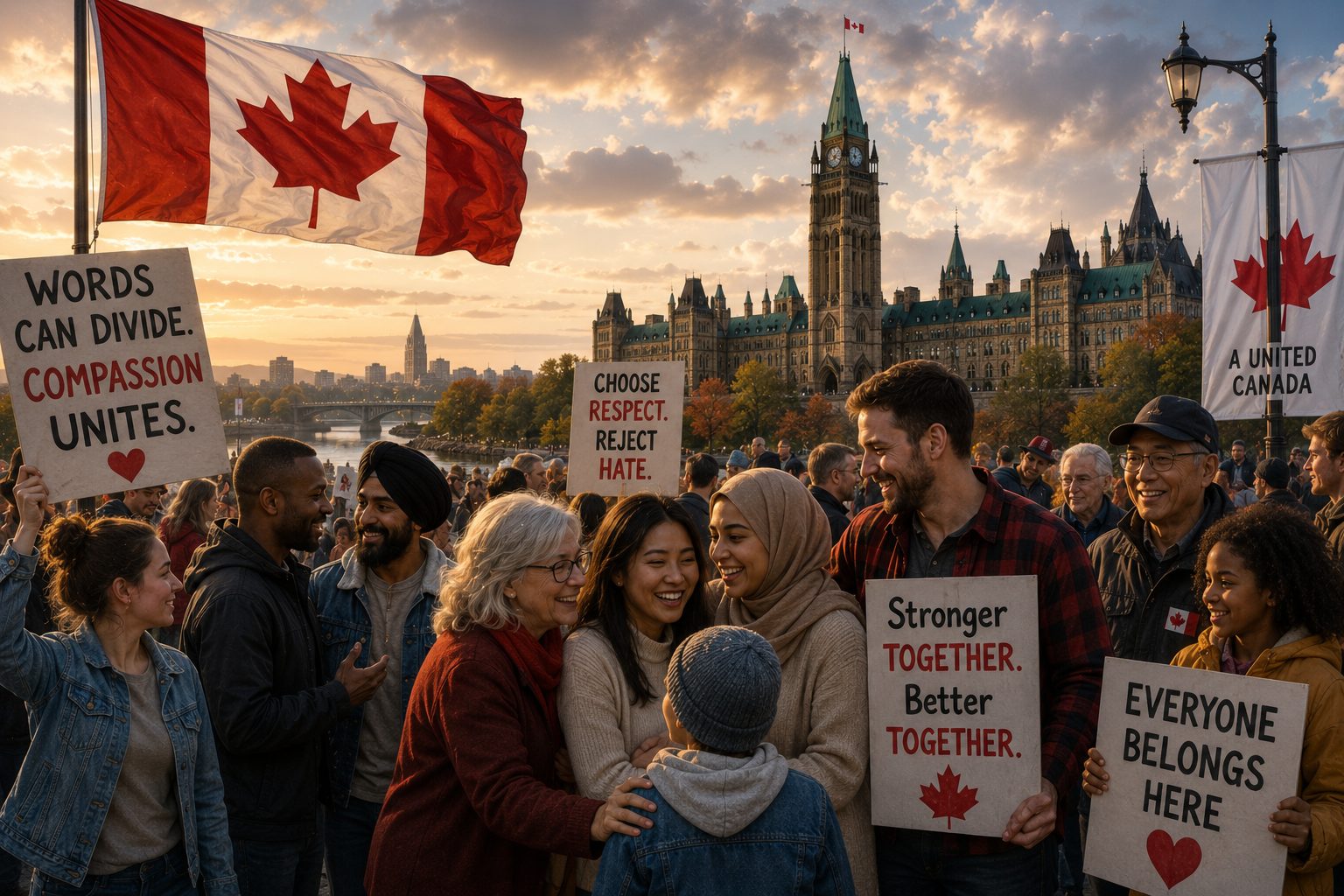
Canada has always felt like a place of welcome, a country that stands for unity, kindness, and compassion. But recently, as we tune into political debates or browse the news, there’s a shift that’s hard to ignore. Divisive rhetoric has crept into the language of our politics, slowly chipping away at the foundation of trust, tolerance, and mutual respect that so many of us hold dear. In the words of Adama Dieng, former United Nations Special Adviser on the Prevention of Genocide, “Words kill as bullets.” In Canada, the words meant to divide us aren’t just lingering in the air; they’re quietly taking root, feeding fear and prejudice, and leading to real-world harm.
But let’s be clear: this isn’t just a failure of leadership. It’s a call to action for all of us. When we let harmful words go unchecked, we allow seeds of division to grow. The sad truth is that for some politicians, hateful rhetoric can be a tempting tool, offering a quick boost in the polls or a headline grab. But what may be politically expedient in the moment does lasting damage. That rhetoric doesn’t stay in the news cycle; it spills into the streets, the parks, the public spaces we all share. It leaves those who are seen as “other” feeling unsafe in the very places where they should feel they belong.
Imagine, for a moment, what it feels like for those on the receiving end. For many in racialized communities, everyday spaces like public transit, shops, and parks are no longer just places to go about their day. They are places that require caution, vigilance, and a careful awareness of how they’re perceived. The hostility may come as a glance, a muttered comment, or a dismissive gesture, but each instance is a painful reminder of their perceived “otherness.” These moments, however small, create wounds of stress, anxiety, and isolation that can persist for years, leaving deep scars on individuals and communities alike.
And yet, even amidst this troubling rise in hate, we see countless individuals and community groups stepping up to counter this narrative with hope, courage, and determination. Organizations across Canada, whether local initiatives, grassroots advocacy groups, or large-scale networks, are working tirelessly to build bridges, foster understanding, and create spaces where everyone can feel safe and valued. They’re holding forums, organizing community gatherings, and providing education and resources that help to dispel myths and misconceptions. These efforts may not always make headlines, but they are a vital force in pushing back against the negativity, making a real difference in the lives of those who feel targeted.
We’re also seeing everyday Canadians who, with small but meaningful actions, are helping to restore our sense of unity. Whether it’s a friendly smile, a gesture of welcome, or simply standing up to say “this isn’t right” when they witness hate, these moments matter. They show that for every word meant to harm, there is another meant to heal.
So yes, it’s essential that we demand better from our leaders. They must do more than campaign on the values of inclusivity and respect; they must embody them, rejecting rhetoric that divides us and instead promoting a vision of Canada that’s safe and welcoming for all. Leaders who fall into the trap of hateful language, whether to gain votes or fire up a base, are not defending our nation’s values. They’re eroding them, risking the very unity that makes Canada the place we all cherish.
But we can’t place the entire burden on politicians. Canada’s true strength has always been in its people. We’re known for our kindness and our resilience, for standing up for what’s right. Each of us, in our own way, can help protect the inclusivity that Canada is known for. We can choose to reject hate, call out divisive language, and make our communities welcoming to everyone. It’s not just about what we want our leaders to do. It’s about who we want to be as a nation.
Let’s continue to build on the incredible work that’s already being done by individuals, communities, and organizations across Canada. Let’s make sure that our words reflect the values of compassion, understanding, and unity. Canada isn’t just an idea. It’s a shared reality that we must all work to uphold and protect.
It’s up to us, all of us, to keep Canada a safe, welcoming place for everyone. This is our home, and by lifting each other up with words that heal, we can keep it that way.