The 2024 U.S. Election: A Resounding Call for Change and a Familiar Gamble on Leadership
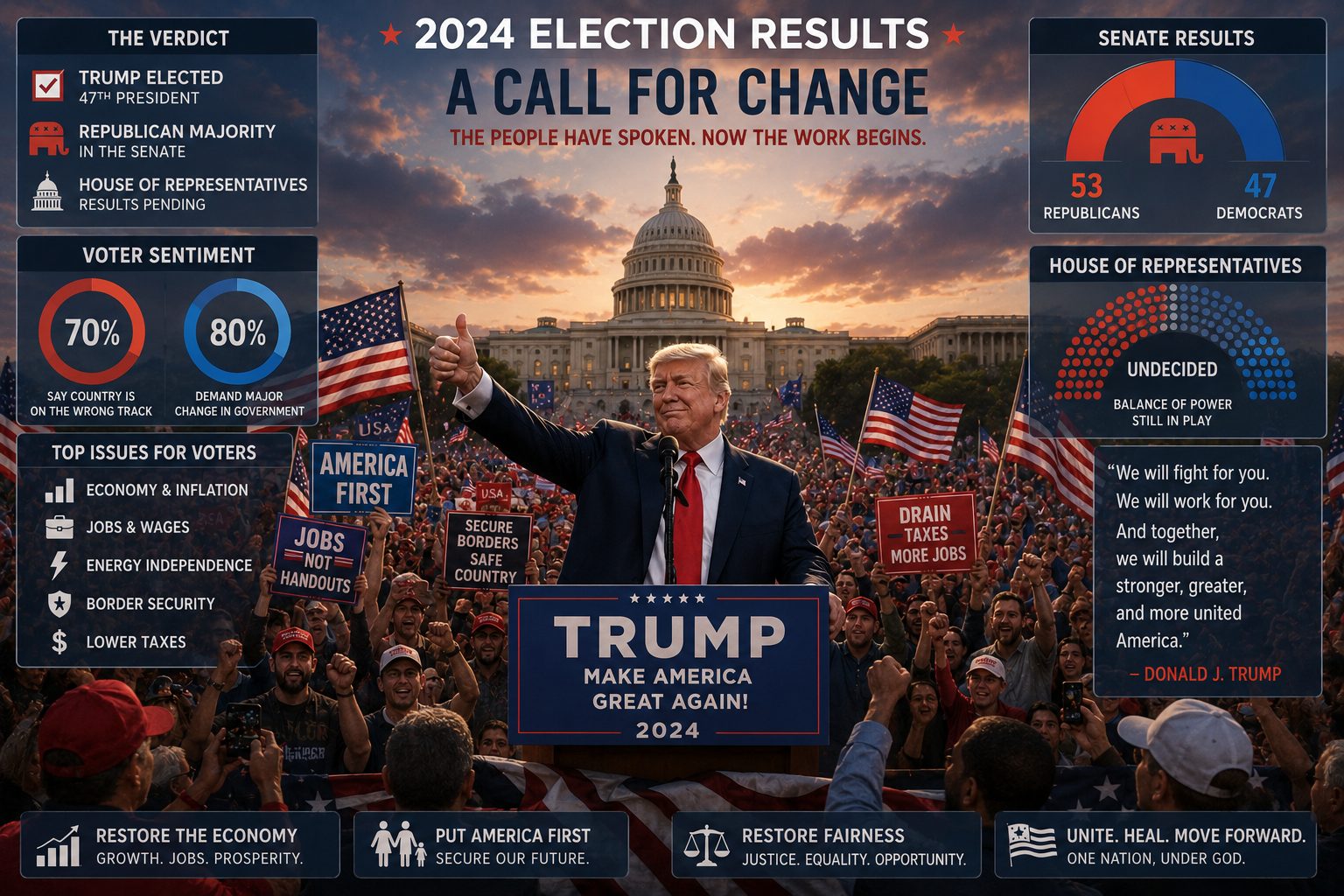
The 2024 U.S. general elections have concluded, and the results are unmistakably bold. With former President Donald Trump returning to the White House, a Republican resurgence in the Senate, and an undecided House, the American public has made a clear statement about their dissatisfaction with the status quo. This election reflects an undeniable mandate for change, but what that change will ultimately look like remains uncertain. The nation has placed its trust in a leader known for his unconventional approach, yet there is a palpable sense of collective hope that this time, perhaps, he will manage to bring the stability and progress people are craving.
A Mandate for Economic and Social Stability Amidst Familiar Chaos
Donald Trump’s victory isn’t just a return to power; it’s a return to his unique brand of leadership: unfiltered, erratic, and, for many, refreshingly anti-establishment. His previous term in office left a lasting impression. For all his accomplishments, his tenure was marked by polarization, a “chaos theory” of governance, and a media-fuelled whirlwind that often detracted from his policies. Trump’s leadership style, unpredictable and unorthodox, resonated with voters frustrated with bureaucracy and yearning for directness. His “America First” philosophy spoke to those seeking economic security and a simpler, less politically entangled administration.
Yet, while his previous administration achieved notable economic successes (lowering taxes, reducing unemployment, and driving manufacturing investments back into the U.S.), it also stirred controversy. His often impulsive policy decisions and polarizing rhetoric left the nation divided. This time around, however, voters seem willing to take another chance, driven by a hope that Trump’s leadership will be tempered by lessons learned and a renewed focus on the future.
A Republican Senate Reflects a Broader Demand for Conservative Solutions
Beyond Trump’s victory, the Republican Party’s success in reclaiming the Senate underscores a national desire for a shift in policy. Key Senate wins in battleground states reflect a clear preference for a more conservative approach to governance, with a focus on economic management, energy independence, and restraint on federal spending. Voters have expressed a desire to rein in what they see as unchecked governmental intervention, emphasizing a preference for personal liberties, traditional values, and a strong national economy.
The new Senate majority, closely aligned with Trump’s goals, will likely pave the way for legislation geared towards domestic economic revival, tax reforms, and a re-evaluation of foreign alliances. But the stakes are high; as much as this Senate reflects voter discontent with recent legislative actions, it also represents a responsibility to govern in a way that maintains stability and balance, a tricky feat under Trump’s tumultuous leadership style.
House of Representatives: Awaiting the Deciding Votes
The House remains undecided, a reflection of just how divided the nation truly is. With both parties in close contention, control of the House could swing either way. Should Republicans gain the majority, Trump’s policies may proceed more smoothly; a Democratic majority, however, would create a counterweight to the administration’s ambitions, potentially moderating his more polarizing plans.
Regardless of the final outcome, the tight race for the House is a stark reminder that America is still a patchwork of diverging perspectives and priorities. The narrow margin of control underscores a collective yearning for balance and for leaders who can bridge divides rather than widen them.
Voter Sentiment: A Hopeful, Yet Cautious, Mandate
If one theme defines the 2024 election, it is a collective demand for change, especially on the economy. Exit polls revealed that approximately 70% of voters believe the nation is on the wrong track, with nearly 80% calling for major reforms in the way the government operates (New York Post). Economic issues were top of mind, with voters hoping for a return to lower inflation, greater energy independence, and improved job security. Trump’s promises to address these issues head-on clearly resonated with a disillusioned electorate.
However, this mandate also comes with a dose of wariness. Voters know Trump’s track record; they remember the turbulent administration that often shifted focus from policy to personal theatrics. This time, voters seem to be placing their faith in a somewhat “modified” Trump, hoping he’s learned from past missteps and will approach his second term with a steadier hand.
Can Trump’s Chaos Theory Be Tempered by Experience?
The question on many minds is whether Trump’s style can evolve to match the responsibilities of this new term. His previous tenure showcased his strengths: an ability to push through his agenda with remarkable speed, an assertive stance on trade and national security, and an economy that, at least until the pandemic, was roaring. Yet, the same term was also rife with controversies, diplomatic fallouts, and a whirlwind of media chaos that kept the nation perpetually on edge.
The hope, though it may be cautious and tempered by past experience, is that Trump will leverage the knowledge gained from his previous term to steer the country through today’s challenges. Can he prioritize stability alongside strength? Will he use his influence to unite, rather than to divide? Americans have handed him a second chance, but it’s clear they expect a shift from the turbulent leadership of before.
What Lies Ahead: The Real Work Begins
The mandate from this election is not just about restoring what once was. It is a demand for growth, accountability, and genuine progress. The public is weary of polarization and gridlock, and Trump’s administration, alongside the new Senate, has a rare opportunity to fulfill that mandate by focusing on policies that tangibly benefit everyday Americans.
Americans are eager to see improvements in their daily lives, from economic stability to accessible healthcare and affordable education. The task now lies with Washington to turn the public’s mandate into real results, balancing Trump’s aggressive agenda with the public’s desire for a more grounded, stable government.
The 2024 elections send a clear message: voters want change, but they also crave consistency and clarity. This balance is now in the hands of a president known for his high-stakes, “all-in” approach. For better or worse, the American people have chosen to roll the dice once more, trusting that Trump’s second term will be less chaotic and more focused on delivering the future they deserve.
The question that remains is whether this administration will truly listen to the voices of those who entrusted it with power. We will find out soon enough. For now, there is a mixture of hope, cautious optimism, and the knowledge that America’s course is once again in familiar, if unpredictable, hands.
Sources & References
- Reuters – Takeaways from the U.S. Presidential Election (November 6, 2024)
- New York Post – Most Voters Say Country Is on Wrong Track, Demand 'Substantial Change': Exit Polls (November 5, 2024)
- Associated Press – Republican Victories in Senate Reflect Broader Public Endorsement (November 6, 2024)
- CBS News – House Election Results 2024: Control Still Up in the Air (November 6, 2024)
- The Wall Street Journal – Trump’s Track Record and the Public’s Gamble on Stability (November 6, 2024)
- The Times – U.S. Election Results Map 2024: Where Trump Secured Key Victories (November 6, 2024)
In-Text Citations
1. “Exit polls indicate that approximately 75% of voters believed the country was heading in the wrong direction, with 61% of these voters supporting Trump” (Reuters, 2024).
2. “Exit polls reveal that about 70% of voters expressed dissatisfaction with the country's current trajectory, with economic issues being a primary concern. Approximately 80% of voters advocated for significant changes in national operations” (New York Post, 2024).
3. “The Republican Party's success in reclaiming the Senate reflects a broader endorsement of their legislative agenda. Key victories in states such as West Virginia and Ohio were instrumental in this shift” (AP News, 2024).
4. “The battle for control of the House remains unresolved, with several races still pending” (CBS News, 2024).
5. “Trump’s previous administration achieved notable economic successes, including lowering taxes, reducing unemployment, and driving manufacturing investments back into the U.S., though it was marked by intense polarization” (Wall Street Journal, 2024).
6. “Trump’s promise to prioritize economic security and domestic industry evidently resonated deeply with voters” (The Times, 2024).